Roof Leak Water Damage in Riverside, CA
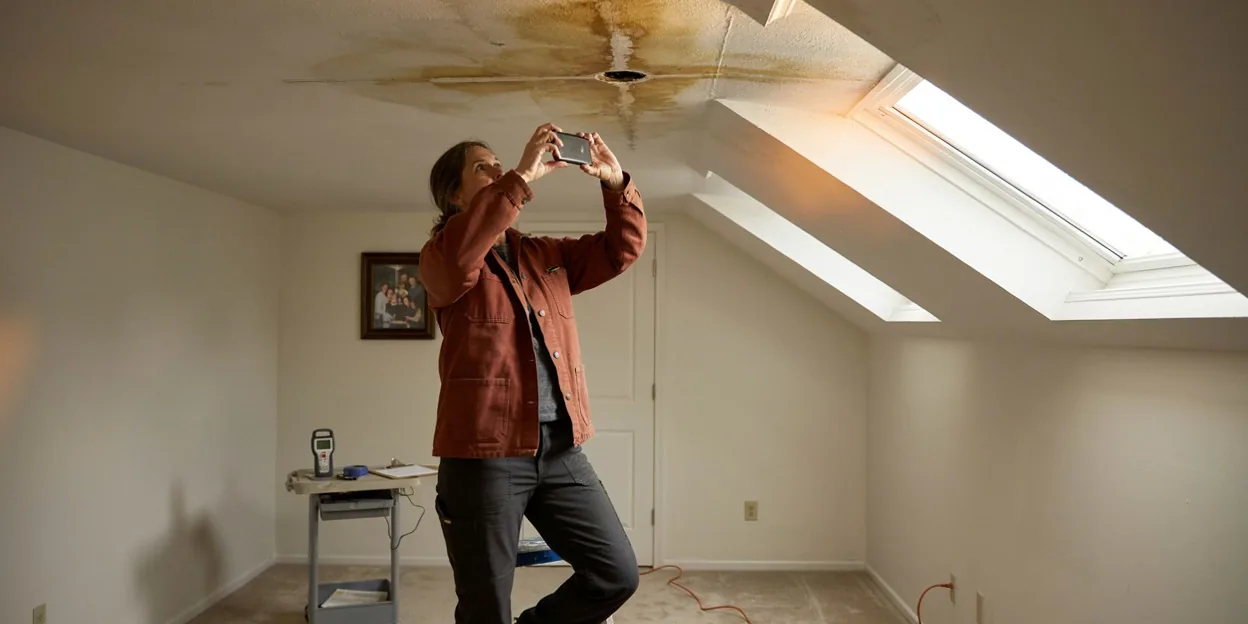
The Santa Anas blew for three days in November and you found two broken roof tiles in the side yard. You forgot about them. Then the first real storm of the winter came through, and by morning there was a wet patch on the bedroom ceiling and water running down the inside of the closet wall. This site routes your call to an independent local provider who dries out roof leak damage in Riverside and across the western Inland Empire.
Where the rain got in and where it ended up are two different places
Water that comes through a roof rarely drops straight down. It runs along the underlayment, hits a rafter or a vent pipe, and lands somewhere else in the attic before soaking through the insulation and showing up on a ceiling ten feet from the entry point. The crew goes into the attic with a meter and a light, follows the water tracks on the rafters back to the entry, and maps everything that got wet on the way down: insulation, ceiling drywall, the top plates of the walls, and the wall cavities the water ran down.
Then they meter the ceiling and walls from inside the rooms to find the wet edge, which is always wider than the stain.
Tarp first, photos second, then the call
If the roof is still open and rain is coming, get a roofer or a handyman to tarp it; the restoration crew dries the inside, not the roof. Put a bucket under any active drip and move furniture out from under the stain. Do not go up on a wet tile roof yourself. Photograph the ceiling, the wall, and the broken tile in the yard. Pull anything stored in the attic away from the wet area if you can reach it safely. Then call and say the roof leaked and the inside needs drying.
Insulation out, drywall metered, framing dried in place
Wet attic insulation comes out and is bagged, because it will hold water against the drywall for weeks. Ceiling drywall that is wet but firm is drained and dried from both sides; drywall that sagged or softened is cut out. The wall cavities the water ran down are opened at the bottom or dried with holes drilled along the base. Rafters and top plates are framing lumber and almost always dry in place with air movement. Anything stored in the attic that got wet is sorted and photographed. The crew logs each material daily until it reads dry, and structural drying equipment runs until then.
The roof repair itself and the ceiling patch afterward are separate jobs. Ask the provider who handles each, so the ceiling does not get closed before the roof is fixed.
Santa Ana winds, concrete tile, and one wet week a year
Riverside roofs spend most of the year baking and the rest of it being worked on by wind. The Santa Anas come down through the Cajon and Banning passes in the fall and winter, and gusts over 60 miles an hour lift concrete and clay tile, crack ridge caps, and peel back underlayment at the eaves. Nothing leaks while it is dry. Then an atmospheric river like the ones of January 2023 and early February 2024 sits over the Inland Empire for two days, and every gap the wind opened lets water in at once.
Tile roofs on the 1980s to 2000s tracts in Orangecrest, Mission Grove, and Canyon Crest are now old enough for the underlayment beneath the tile to have failed, and the tile itself looks fine from the street. Composition shingle on the 1950s and 1960s houses in Arlington and La Sierra fails at the valleys and around the swamp cooler stand. The older bungalows in the Wood Streets have steep roofs that shed water well but leak at the chimney and the dormers.
A leak that shows up on a ceiling is covered on the ceiling water damage repair page, and water that came in under the garage door during the same storm is storm flood cleanup. Wind-driven rain through a damaged roof is often a covered loss; a roof that has been leaking for years from worn-out underlayment often is not. The crew documents; the adjuster decides. This site makes no promise about coverage.
Calling about rain that came through the roof in Riverside
Say where the stain is, whether the roof has been tarped, and whether water is still coming in. Mention broken tile you found or a swamp cooler on the roof. Have the address and a return number ready when you dial. Call (951) 631-2989.